

Published on 01/12/2025
Uganda’s public sector is grappling with an alarming staffing crisis, with nearly half of all approved government positions lying vacant despite growing demand for critical services.
A new report by the Ministry of Public Service shows that as at December 2024, 301,600 positions, representing 46% of the entire public establishment, remained unfilled, with the health and education sectors suffering the biggest gaps.

The State of Human Resource in the Public Service 2024, published on 16 October 2025, also reveals a troubling generational imbalance: young people aged 18–29 hold only 8.6% of public sector jobs, even though they constitute one of the largest demographic blocs and face the country’s highest unemployment rates.
According to the Ministry, the approved establishment in 2024 stood at 658,104 positions, yet only 356,504 were filled, reflecting a 54% fill rate, down from 55% in 2023. “The slight decline in staffing levels, 2.7 percent, and a 1 percent drop in the fill rate underline the growing strain on service delivery,” the report notes.
The Ministry warns that the 46% staffing gap poses “serious implications for the quality and efficiency of service delivery,” attributing the crisis to inadequate wage provisions, and expansion of health-sector staffing structures without corresponding recruitment budgets. This shortage persists even as government spending on administration continues to draw scrutiny.

In the Minority Report on the 2025/26 National Budget, Shadow Finance Minister Ibrahim Ssemujju Nganda criticised government’s swelling administrative expenditure, pointing out that 16% of the national budget is spent on less than 1% of the population. He said: “Taxpayers are spending UGX 12.8 trillion on public servants. This represents roughly 16% of the entire budget.”
Ssemujju reminded Parliament that while the President had earlier claimed public service employs about 480,000 people, the Auditor General’s verified figure is 396,997, till less than 1% of Uganda’s population.
Despite Uganda’s youthful profile, 2024 National Housing Survey data shows more than half (54.27%) of Ugandans are aged 15–64, the public service remains dominated by older age groups. Government employs only 30,780 youths (aged 18–29), comprising 14,333 women and 16,447 men.
The largest share of the workforce lies in the 30–39 years (35.1%) and 40–49 years (33.6%) cohorts. Meanwhile, 22% of staff are aged 50–59, and nearly 3,000 employees (0.8%) are already 60 or above. The report warns that more than a quarter of the public service will hit retirement age in the next decade, posing risks to continuity and institutional memory unless urgent succession planning is undertaken.

Despite women forming the majority of Uganda’s population, the report highlights persistent gender disparities. An analysis of 888 key strategic positions shows women occupy only 232 roles (26%). While there is parity among Justices, Judges, and chairs of commissions, the imbalance widens in top executive positions:
- Permanent Secretaries: 10 of 22 (45%) are women
- Heads of Agencies/Departments: 25% women
- Resident District Commissioners: 25%
- Heads of Referral Hospitals: 18%
- Chief Administrative Officers: 15%
- City Town Clerks: 10%
- Heads of Public Universities: 9%
- Municipality Town Clerks: 6%
- Directors: 21%
- Commissioners: 27%
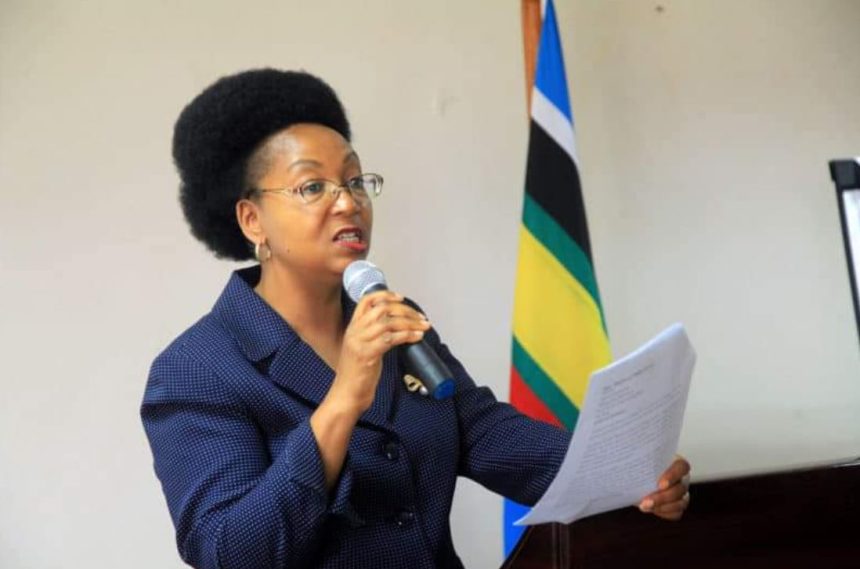
Permanent Secretary Catherine Bitarakwate said the report aligns with the Ministry’s mandate to ensure sound human resource management and to guide government reforms. “Human resources are the cornerstone of effective public service delivery. Understanding the size, structure, distribution, and capacity of the public workforce is essential for informed planning,” she wrote.
The Ministry, however, cautions that the data excludes UPDF, ISO, ESO, and parastatals undergoing rationalisation, and may carry errors due to ongoing payroll cleanup exercises. The findings draw from the Integrated Payroll and Personnel System (IPPS), Human Capital Management System, and Programme Budgeting System, among others.
With nearly half of government offices empty, a shrinking youth presence, and looming retirements, the report paints a stark picture of a public service in urgent need of revitalisation, and strategic investment to keep pace with Uganda’s development ambitions.