
Published on 01/12/2025
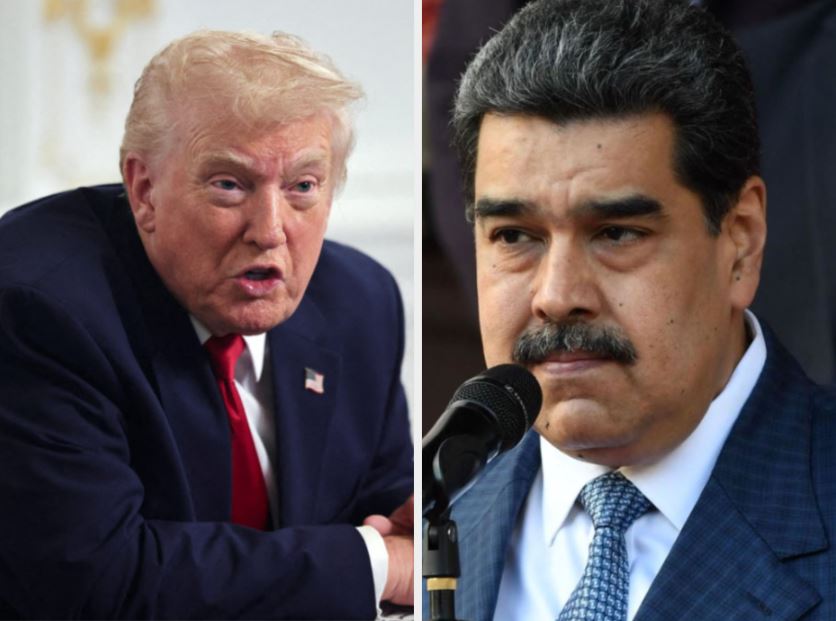
Nicolás Maduro government strongly rejected claims from US President Donald Trump that Venezuelan airspace should be considered “closed in its entirety.”
Caracas condemned the White House’s “colonialist threats” as a new “extravagant, illegal and unjustified” attack against the Caribbean nation in a statement issued Saturday.

“These kinds of declarations constitute a hostile act that is incompatible with the most basic principles of international law,” the communique read. “Venezuela will not accept orders or threats from a foreign power.”

The Maduro government likewise stated that Trump’s comments amounted to a unilateral shutdown of ongoing deportation flights. Despite previous escalations, Venezuela had been receiving two weekly flights repatriating hundreds of nationals.
The Venezuelan statement went on to call on the international community to reject the threats against the country’s sovereignty. Colombia, Iran and Cuba were among the countries to swiftly rebuke the US president’s claims.
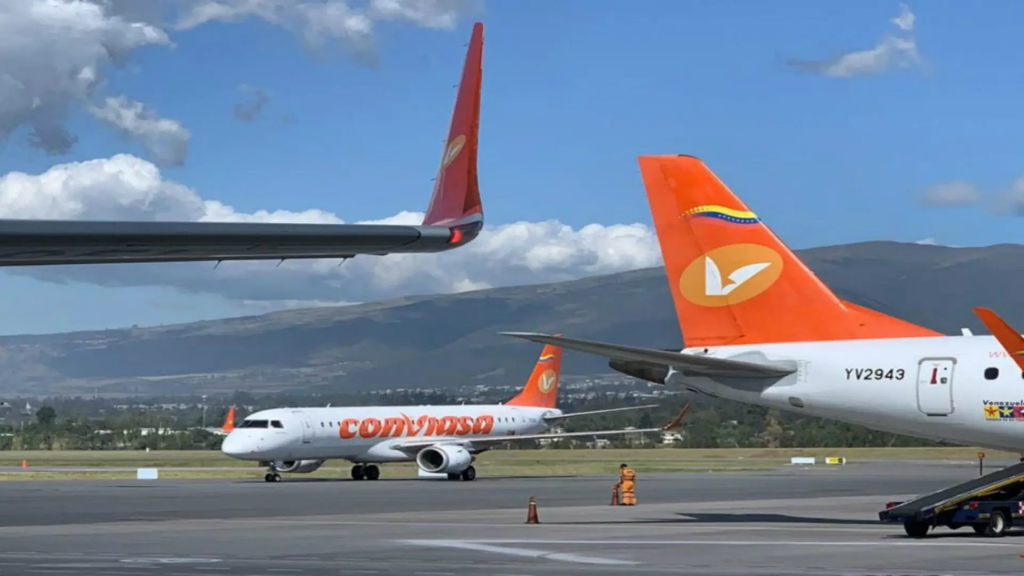
Trump’s latest comments followed a Note to Airmen (NOTAM) warning from the US Federal Aviation Administration (FAA) urging caution in Venezuela’s Flight Information Region (FIR). The memo led most international airlines servicing Venezuela to suspend their flights. The Maduro government permanently withdrew the airlines’ clearance to operate in Venezuela in response.
However, Venezuelan air traffic was unaffected by Trump’s statement, with both domestic and international flights proceeding as scheduled over the weekend.
The latest airspace threats came amidst the US’ largest military buildup in the Caribbean in decades. Washington has deployed an aircraft carrier, guided-missile destroyers and thousands of troops on a self-declared anti-narcotics mission.
US fighter jets and bombers have repeatedly flown inside the Maiquetía flight information region, often with transponders turned off. Venezuelan territory and surrounding waters have likweise seen increased GPS jamming in recent weeks.
Since early September, US forces have bombed 22 boats accused of carrying US-bound drugs, killing over 80 civilians in the process. Trump has repeatedly stated that land strikes against alleged drug targets inside Venezuelan territory would follow.
Despite reports that several members of the Trump administration are pushing for regime change, the US president confirmed that he held a phone call with his Venezuelan counterpart but refused to say whether the conversation went “well or badly.” When asked whether his social media post regarding Venezuela’s airspace meant an attack was imminent, Trump told reporters “Not to read anything into it.”
US officials have justified the military buildup and ongoing threats on “narcoterrorism” accusations against Maduro and other high-ranking leaders. The US State Department recently designated the so-called Cartel de los Soles as a foreign terrorist organization.
However, US authorities have not provided court-tested evidence of the Cartel de los Soles’ existence nor of any Venezuelan leader’s ties to narcotics trafficking. Reports from the UN Office on Drugs and Crime (UNODC) and the US Drug Enforcement Agency (DEA) have indicated that Venezuela plays only a marginal role in drug trafficking, with most US-bound cocaine arriving via the Pacific and Central America.
Boat strikes draw increased scrutiny
The US military’s lethal attacks against small vessels in the Caribbean and Eastern Pacific have drawn renewed scrutiny following a report that Secretary of War Pete Hegseth gave orders to kill all 11 people aboard the boat struck on September 2. The unusually high number of passengers for a purported drug-smuggling boat has led to speculation that some on board may have been victims of human trafficking.
According to the Washington Post, Hegseth’s instructions led US forces to conduct a second strike after determining that two people had survived the initial bombing.
To date, US officials have not presented evidence about the boat crews’ identities and cargoes. UN experts and the UN High Commissioner for Human Rights, Volker Türk, have labeled the US vessel strikes as extrajudicial executions and violations of international law.
Democrat and Republican members of Congress have called for investigations into the boat strikes. Senator Tim Kaine (D-VA) stated that Hegseth’s actions would amount to a war crime if confirmed and vowed to reintroduce a War Powers bill in the Senate to curtail further unilateral military actions from the administration.
Two previous legislative efforts, including one specifically barring strikes inside Venezuelan territory, were narrowly defeated in the US Senate.
For its part, the Venezuelan National Assembly announced that it will investigate the US’ lethal operations and support relatives of Venezuelan victims. National Assembly President Jorge Rodríguez stated that Hegseth’s alleged orders violated international humanitarian law.