
Published on 13/11/2025
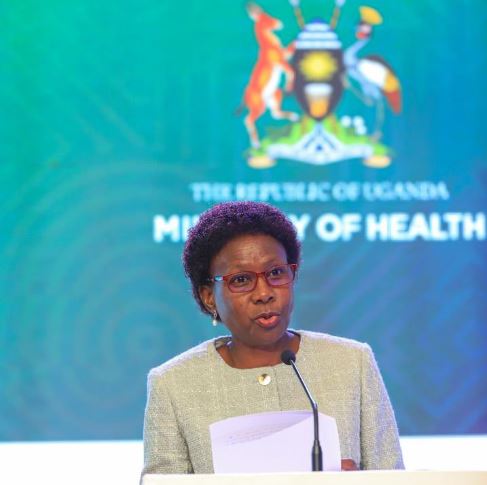
Ministry of Health has once again come under sharp scrutiny in Parliament over its failure to complete four externally funded projects, some delayed for over 18 years, raising fears that new planned cancer centres in Arua and Mbale may suffer a similar fate.
The concern emerged as Parliament considered a government proposal to borrow UGX 165.69 billion to finance the construction and equipping of regional oncology centres. The loans include €9.4 million (UGX 37.9 billion) from UniCredit Bank Austria for the Mbale Oncology Centre and US$36.5 million (UGX 127.7 billion) from the Islamic Development Bank (IsDB) for the Arua Oncology Centre and radiotherapy equipment for Mbale.

While presenting the report of the Committee on National Economy on October 28, 2025, Vice Chairperson Robert Migadde expressed concern that the government had made no clear commitment to provide counterpart funding for the projects, despite being expected to contribute US$4.79 million (UGX 16.76 billion) toward total costs.
“Government is expected to contribute US$4.79 million towards this project,” Migadde told Parliament. “However, the Committee found no approved government resources for this purpose in the 2025/26 budget, nor did the Ministry of Finance give any assurance that these funds will be availed. We recommend that government commits to provide the counterpart funding and ensure timely implementation to offer the much-needed oncology services in these regions.”
His statement immediately drew concern from Muwanga Kivumbi (Butambala County), who warned that without guaranteed counterpart funding, the project could stall like several others under the Ministry of Health.
“Did I hear properly that government hasn’t provided proof of counterpart funding?” Muwanga asked. “We have seen projects under this docket take 12 years or more without completion. The reason is simple, you borrow without providing counterpart funding.”
According to committee findings, by December 2024, the Ministry of Health was managing four externally financed projects worth US$120.86 million (UGX 422.9 billion). However, only 56 percent of the funds had been disbursed, with some projects registering no financial progress at all.
Among these is the Uganda Heart Institute Infrastructure Development Project, worth US$73 million (UGX 255.3 billion), which became effective in 2023 but has already experienced delays due to insufficient funding for power supply at the project site and inconsistent timelines from different funders.
The East African Centres of Excellence for Skills and Tertiary Education in Biomedical Sciences Phase I, implemented by the Uganda Cancer Institute since 2016, has also faced nine years of delays despite full disbursement, largely due to contractor cash flow constraints.

Other stalled projects include the Uganda Debt Swap Program for rehabilitation of general hospitals, worth US$17.37 million (UGX 62.0 billion) from Spain, which has faced a 12-year delay due to bureaucratic approvals, and the Karamoja Infrastructure Development Project Phase II, worth €12.14 million (UGX 49.0 billion) from the Italian Government, delayed by inadequate counterpart funding since 2022.
Despite these setbacks, Mbale Industrial Division MP Karim Masaba and Terego Woman MP Rose Obigah urged colleagues to support the cancer centre loans, arguing that the projects address a critical national health need.
Masaba defended the loans as “development-oriented,” saying, “Many of the loans government brings are consumptive, but this one will benefit millions. The Mbale Cancer Centre will serve the entire Eastern region.”
Obigah echoed the urgency from a regional perspective. “In Arua, the disease burden has shifted heavily to cancer. Our referral hospital serves 43 MPs’ constituencies in West Nile. We can’t delay funding for such a vital facility,” she said, cautioning colleagues against blocking the loans.
Migadde, however, emphasized that while his committee approved the loans, the lack of counterpart funding remains a serious concern that must be resolved to ensure success. He reminded Parliament that the Uganda Cancer Institute in Kampala currently serves 45.9 million Ugandans, handling an estimated 35,968 new cases and 24,629 deaths annually.
“The limited availability of oncology services outside Kampala creates congestion at Mulago and leads to late-stage diagnosis, poor treatment outcomes, and higher mortality,” Migadde said. “Establishing regional oncology centres is crucial to decentralizing cancer care and ensuring equitable access.”
The government maintains that the new projects aim to improve access to specialized diagnosis and treatment for cancer patients in Eastern and West Nile regions, easing the burden on Mulago and boosting overall healthcare quality.
Migadde concluded that investing in oncology services would also make long-term economic sense: “Early-stage cancer treatment with radiotherapy can prevent disease progression and reduce future healthcare costs. A well-developed health system is an engine of productivity, it saves lives, reduces costs, and strengthens national growth.”