
Published on 15/11/2025
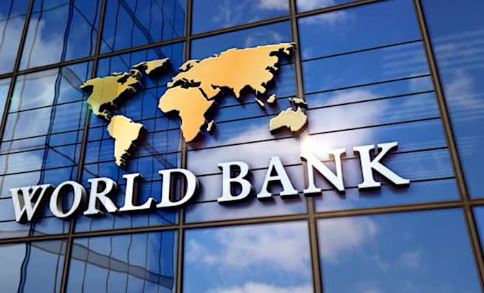
Nearly two years after suspending new project financing to Uganda over the passage of the Anti-Homosexuality Act, the World Bank Group has lifted its funding ban, drawing both praise and criticism from Ugandan legislators.
Deputy Speaker Thomas Tayebwa was among the first to welcome the decision, congratulating the Ministry of Finance for what he described as a major breakthrough. He argued that the move would bolster the Ugandan shilling and said countries struggling with currency volatility against the U.S. dollar could learn from Uganda’s experience.

“Colleagues, I congratulate the Minister of Finance and the Executive for striking another deal with the World Bank. Our currency has been the best-performing in the region. While others are facing volatility, here the dollar is struggling against the Uganda shilling. I think they need our advice on how to handle macroeconomic stability,” Tayebwa said.
Following the lifted ban, Parliament in October 2025 approved the government’s proposal to borrow US$1.341 billion (UGX 4.726 trillion) and receive grants worth US$328.3 million (UGX 1.156 trillion) from the World Bank Group. The financing will support major initiatives including Phase Four of the Northern Uganda Social Action Fund (NUSAF IV), Phase Two of the Development Response to Displacement Impacts Project (DRDIP II), the Uganda Learning Acceleration Program (ULEARN), Uganda Cities and Municipalities Infrastructure Development (UCMID) Program and Strengthening Public Investment and Asset Management for Growth and Resilience Program (PIMPLUS).
RELATED:
Government Gets Green Light To US$1.3Bn World Bank Loan For Key National Development Projects
Legislators Halt Approval Of US$1.34Bn World Bank Loan Pending Clarity on UCMID Conditions
Uganda Seeks Ugx. 2.27Trn World Bank Financing To Boost Education And Refugee Infrastructure
Parliamentary records indicate that the total approved World Bank package amounts to US$2.7629 billion (UGX 9.614 trillion), comprising concessional borrowing (US$1.388 billion), grants (US$325.8 million), and government counterpart funding of US$449.1 million (UGX 1.582 trillion).
Not all legislators shared Tayebwa’s enthusiasm. Ibrahim Ssemujju Nganda, MP for Kira Municipality and Shadow Minister for Finance, questioned the celebratory mood, pointing to Uganda’s rapidly increasing public debt and the World Bank’s position as the country’s largest creditor.
“I saw colleagues celebrating that the World Bank is giving us more money. But by the time we passed the budget, we owed the World Bank UGX 18 trillion, followed by China at UGX 9 trillion. That is why 38% of the budget is for debt servicing. Of the money released in the first two quarters, about UGX 30 trillio, UGX 15 trillion has gone to servicing debt,” Ssemujju cautioned.

Timothy Chemonges, Executive Director of the Centre for Policy Analysis, said the excitement was understandable, noting that the UGX 9 trillion package would significantly support infrastructure, education, health and refugee-related programs, particularly in Northern Uganda. However, he warned against ignoring persistent weaknesses.
“The World Bank lifting the ban signals a partial restoration of donor confidence. But celebrating without addressing the structural issues that caused project delays, cost overruns and low absorption rates would be premature. The key challenge is not access to money, but ensuring efficiency and accountability,” he said.
According to the Annual Debt Statistical Bulletin and Public Debt Portfolio Analysis (June 2025), Uganda’s total public debt stood at UGX 116.2 trillion (US$32.3 billion), a 26.2% increase from June 2024. External debt accounted for UGX 55.9 trillion (US$15.5 billion).
Multilateral creditors held 66% (US$10.3 billion) of the external debt, followed by bilateral lenders at 23% (US$3.45 billion) and private banks at 11% (US$1.8 billion). The International Development Association (IDA) was the largest single creditor at US$5.3 billion, while China’s Exim Bank accounted for 70.2% of Uganda’s bilateral debt.
The World Bank froze new lending to Uganda in August 2023 after the enactment of the Anti-Homosexuality Act, saying the legislation fundamentally contradicted its global standards on inclusion and nondiscrimination. A portfolio review team later determined that additional safeguards were necessary to ensure compliance with the Bank’s environmental and social frameworks, prompting the suspension of new financing until further measures were adopted.
With the freeze lifted, policy experts are urging the government to address long-standing weaknesses in project design and execution to maximise the impact of World Bank financing.
Chemonges advised the government to strengthen project preparation and coordination. “Many World Bank projects in Uganda have struggled due to weak feasibility studies, delayed procurement and lack of readiness at approval. Uganda needs a stronger pre-implementation framework where design, land acquisition and environmental assessments are completed before money is released.”
He also called for speeding up procurement processes, among the slowest in the region, and for strengthening the technical and financial management capacity of local governments that will oversee much of the implementation.
“Since many projects will be executed in municipalities and refugee-hosting districts, local structures must have qualified engineers, planners and accountants. Uganda should tie future disbursements to measurable results, kilometres of road built, schools upgraded, jobs created, rather than just absorption rates,” Chemonges concluded.