
Published on 21/11/2025
President Yoweri Museveni has said his directive on wetlands is not intended to expel communities from areas they have historically used, but to ensure that Busoga and other regions make better, more profitable and sustainable use of the sensitive ecosystems.
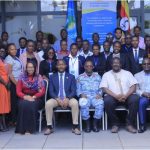
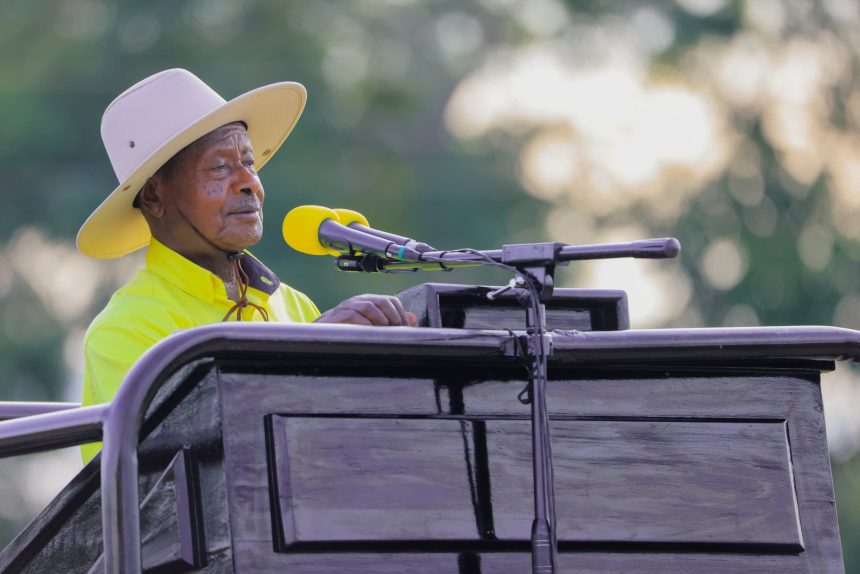
Speaking to journalists from the Busoga sub-region at Mayuge State Lodge on Thursday night, the President noted that he is “an indigenous person of this area” who understands how wetlands have traditionally supported livelihoods.

He explained that the question has never been whether people should use wetlands, but how they should be used without destroying them.
He recalled that wetlands once provided materials for roofing, making mats, mulching grass and fishing—uses that did not harm the environment. What he objects to, he said, is the draining of swamps for rice cultivation, which he described as “misusing and underusing” the wetlands.
Museveni cited the Doho rice scheme as an example of proper practice where water is drawn from rivers for irrigation instead of draining wetlands.
He compared returns from rice to other enterprises, noting that Doho rice growers earn about UGX 7 million per hectare, while a properly managed fish pond can earn up to UGX 140 million net per hectare. He said this shows that wetlands can deliver far greater economic benefits if used differently.
“It is not about moving people. It is about helping them use wetlands more profitably while restoring water for irrigating the uplands,” he said.
The President also warned that wetland destruction contributes to weakening rainfall patterns. He contrasted northern Uganda, which continues to receive strong rains due to intact swamps in South Sudan, with the south where rainfall has reduced in strength over the years.
The consequence, he said, is environmental degradation and increased costs for farmers who now travel long distances to find mulching grass that used to grow nearby.
Before taking questions, Museveni outlined what he called the seven bricks—the NRM’s core achievements in transforming Uganda.
These include peace and security, which he attributed to the NRM’s non-sectarian ideology and the building of strong national institutions; development infrastructure such as roads, electricity, schools and health centres; wealth creation at household level to tackle poverty; and jobs generated through productive sectors like agriculture, manufacturing, ICT and services.
He also pointed to service delivery, observing that immunisation has excelled while curative health still faces issues such as theft of medicines.
Museveni highlighted economic integration through the revival of the East African Community as another pillar, arguing that Uganda’s growing surpluses of milk, maize, cement and other products need a reliable regional market.
He added that political integration through an East African Federation was essential for Africa’s long-term security, saying fragmented states cannot defend themselves in a world where major powers have advanced to the level of space exploration. “Who rescues Africa when countries are attacked? We must unite,” he said.
Responding to a question about his 1998 directive for land to be returned to residents of 48 villages in Mayuge who were displaced by the National Forestry Authority, Museveni said he was shocked to hear allegations that some government officials may have obtained land titles illegally.
He said government would investigate the matter. “If we find it is true, they will answer. The land is here, not in Congo,” he said. He noted that earlier delays had been caused by NFA’s demand for alternative land of equal value.
On the issue of compensation for residents affected by the Standard Gauge Railway, Museveni directed the NRM Secretary General Rt. Hon Richard Todwong to contact with the works ministry on the progress so far made.