

Published on 06/12/2025
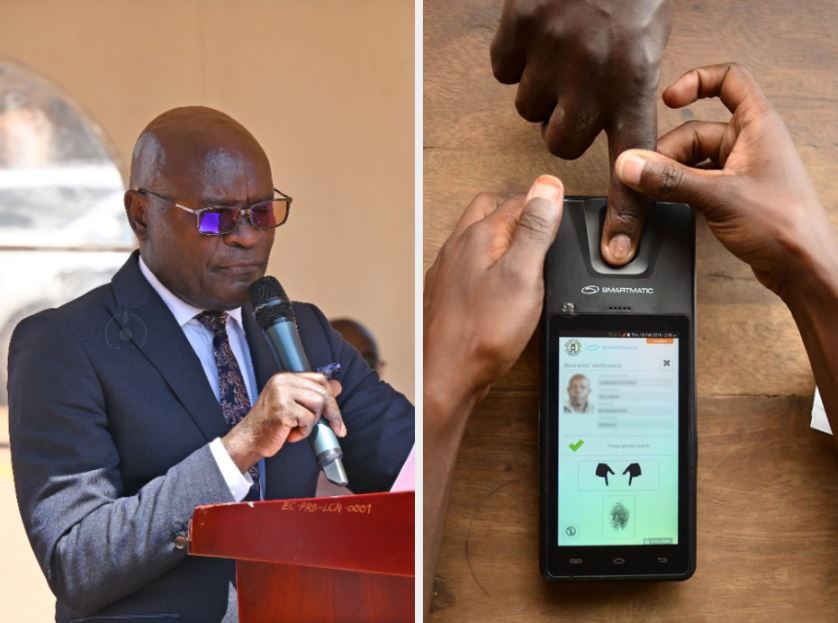
Electoral Commission (EC) is under intense scrutiny for its decision to confine Uganda’s newly acquired 109,000 Biometric Voter Verification Kits (BVVKs) to offline operations for the 2026 general elections.
The backlash follows the EC’s announcement that the machines will only assist in verifying voters, without enabling direct electronic transmission of results, thereby maintaining the traditional system of physically transporting Declaration of Results (DR) forms to tallying centers.

According to the EC, this approach is intended to mitigate the risk of hacking and ensure election security. “For security purposes, the machines will not be networked. They will operate offline under the Android system and will not be able to transmit results,” said Richard Kamugisha, Head of Field Operations at the Electoral Commission.


Kamugisha explained that all ballot papers will feature barcodes to be scanned by the BVVKs. The machines will also scan DR forms and ballot booklets. “We shall transmit results using the Declaration of Results form, but this BVVK will verify and authenticate the barcode of the DR form at the returning officer’s office to ensure it has not been altered along the way,” he added.
The BVVK rollout, costing UGX 268.38 billion, is intended to combat electoral fraud by verifying voters rapidly, each voter is expected to take just 30 seconds to be authenticated. In its supplementary budget submission to Parliament, the EC requested UGX 469.5 billion for the upcoming electoral cycle, including UGX 46.956 billion for ballot paper production, UGX 32.45 billion for biometric verification operator training, and UGX 25.914 billion for polling materials.
Additional allocations included UGX 19.6 billion for a voter deduplication system, UGX 9 billion for registering and inventorying machines, and UGX 6.3 billion for an electronic results dissemination system. Funds were also requested for gazetting and segmenting polling stations, and procurement of other election forms.

Despite this, the EC maintains that the BVVKs will remain offline, a position that has drawn criticism from lawmakers. Under Uganda’s Presidential and Parliamentary Elections Act (Cap 140) and the Electoral Commission Act (Cap 140), the EC is mandated to ensure that elections are free, fair, and transparent, including the secure verification and transmission of results.
Section 39 of the Presidential and Parliamentary Elections Act gives returning officers responsibility to transmit results, while Sections 18 and 19 of the EC Act empower the Commission to adopt technology for electoral management, provided the integrity of the process is guaranteed.
Critics argue that the EC’s current approach undermines these mandates. “They claim the machines cannot be hacked, but then we have different results, and you ask why there isn’t one system built to handle the entire process electronically,” said Ibrahim Ssemujju, Kira Municipality MP.
“Why is there no provision for electronic transmission of results? Right now, we chase these results like we are chasing a thief, put in an envelope, transported by hired boda bodas. The technology is expensive, yet the most contentious phase of elections remains unsecured.” Ssemujju also criticized the EC’s focus on preventing multiple voting and ballot stuffing, calling it a “superficial tactic” that fails to address historical sources of electoral malpractice.
EC spokesperson Julius Mucunguzi defended the offline system, stressing that measures are in place to safeguard the integrity of results. “There is no body that can come and pretend to be someone else and vote in their name,” he said. “Both the machines and the DR forms will be securely transported to the tally center. We are confident that these procedures will maintain the credibility of the elections.”
The EC argues that the offline approach balances technological innovation with security, ensuring that Uganda can adopt biometric verification while mitigating the risk of cyber interference, a lesson drawn from global experiences where electronic transmission systems have occasionally been compromised.