
Published on 03/12/2025
Ugandans in Switzerland can now apply for and receive National IDs, register for NINs (including for children) and update their personal particulars—all without leaving the country.
From 26th to 29th November 2025, the Embassy of the Republic of Uganda to the Swiss Confederation and Permanent Mission to the UN in Geneva carried out a multi-sectoral Diaspora Engagement and Consular Service Delivery mission in the cities of Geneva and Zürich, marking one of the most comprehensive outreach efforts ever conducted for Ugandans in Switzerland.

The outreach not only delivered practical solutions but also reaffirmed the Government’s recognition of the diaspora as a vital part of Uganda’s national fabric.


Over the course of the four days, Ugandans of all ages—families, students, long-term residents, and new arrivals—converged at the Mission premises in Geneva and later at GZ Hirzenbach Community Centre in Zürich to access a one-stop centre offering National Identity services, immigration support, and land consultations. Questions on citizenship, long-standing land matters, and travel documentation were raised by the Ugandan diaspora, reflecting the varied needs of the community.
Working closely with the National Identification and Registration Authority (NIRA), National Citizenship and Immigration Control (NCIC), both under the Ministry of Internal Affairs, and the Ministry of Lands, Housing and Urban Development (MLHUD), the Mission brought essential consular services directly to the community—many of them for the first time.
Equally important, the visit strengthened trust, visibility, and connection between the Government and its diaspora—making the Mission in Geneva a true one-stop gateway for consular services.

Permanent Representative of Uganda to the UN in Geneva, Amb. Marcel Tibaleka said, “This outreach is particularly significant because it has marked the formal activation of a fully functional NIRA and Immigration workstation within the Mission in Geneva,” he said, adding “The activation of visa-issuing capability at the Mission is a defining moment. Tourists, researchers, and travellers intending to go to Uganda can now obtain their Ugandan visa directly from the Mission in Geneva, bringing unprecedented convenience to the Swiss community”.
The activities in both cities were characterised by long queues of Ugandan applicants seeking new IDs, renewals, or replacements for lost cards. Parents brought children for NIN enrolment; others came to resolve complex cases, follow up on assigned NINs, or seek guidance on citizenship matters.
NIRA not only handled these services but also trained Mission staff in biometric enrolment, troubleshooting, citizenship verification, and digital form submission—ensuring continuity of services long after the visiting technical teams returned to Uganda. By the end of the mission, the Embassy was fully equipped and empowered to continue providing NIRA services independently.
The Directorate of Immigration delivered equally important support. Officers sensitised the diaspora on passport application procedures, online payment platforms, dependants’ facilitation—including Dependant Passes and Certificates of Residence—and the processes for acquiring citizenship, whether through dual nationality or marriage.

The Permanent Secretary, Ministry of Lands, Housing and Urban Development, Mrs. Dorcas Okalany and her team, met diaspora members one-on-one, answering questions about land ownership, title verification, investment opportunities, and navigating Uganda’s evolving land governance framework.
They demonstrated the capabilities of the Uganda National Land Information System (UgNLIS), which has digitised over 1.5 million titles, integrated various land-sector institutions, and introduced remote access tools that allow diaspora members to verify land ownership from anywhere in the world. Conversations also centred on Uganda’s housing deficit, ongoing reforms in slum upgrading, the Housing and Real Estate Information System, and opportunities for diaspora investment in real estate, agriculture, and commercial land projects.
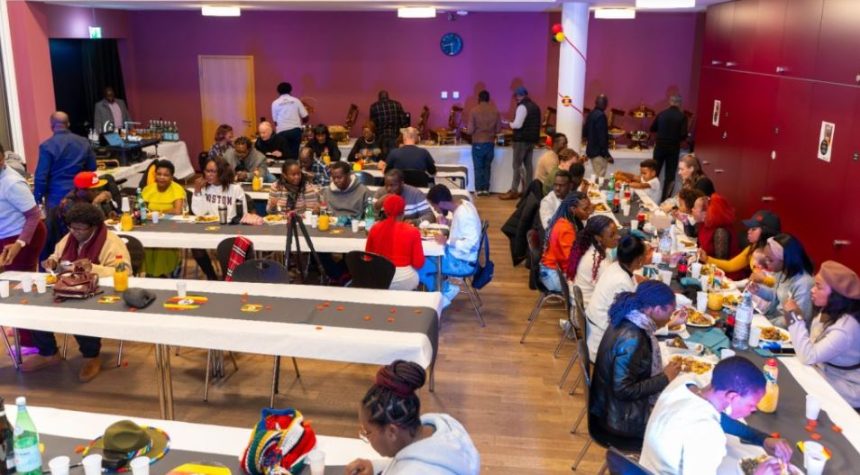
The four-day mission culminated in a joyous Uganda@63 Independence celebration in Zürich which included the Ugandan Diaspora, echoing the unity and cultural pride of the Ugandan community in Switzerland.
Ambassador Tibaleka delivered heartfelt thanks emphasising the important role of the diaspora in shaping Uganda’s development story and reaffirming Government’s commitment to bringing key services closer to Ugandans abroad.
As the Mission prepares to expand similar engagements in 2026, Ugandans in Switzerland can look forward to consistent access to essential services, deeper engagement, and growing opportunities to contribute to Uganda’s development from wherever they are in the world.