
Published on 06/12/2025
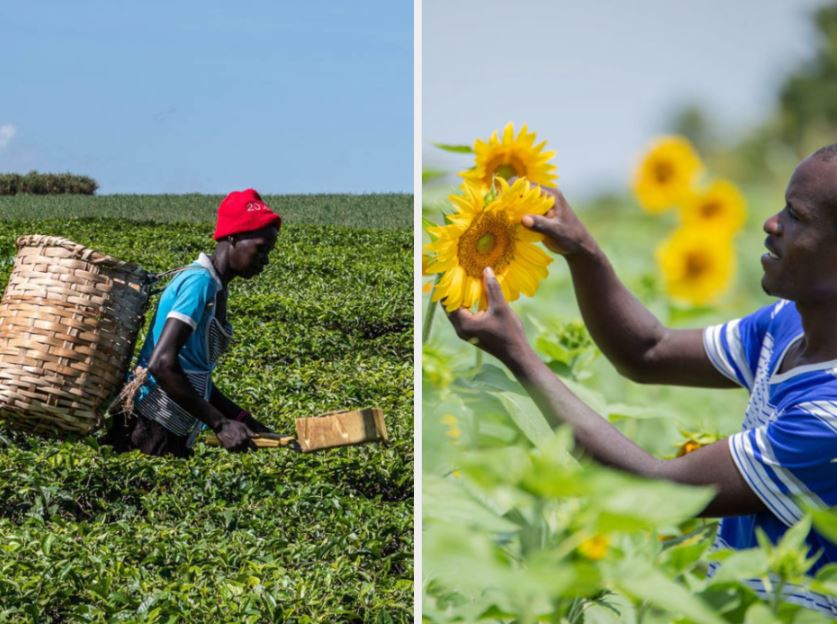
Parliamentarians have raised concerns over what they describe as discriminatory payments of UGX 34.63 billion to tea seedling farmers in Western Uganda, while their counterparts in Northern Uganda seeking a UGX 5 billion bailout for oilseed production remain unassisted.
The protest emerged during a meeting between Parliament’s Budget Committee and the Ministry of Agriculture on 2 December 2025, while considering supplementary expenditure schedules.

The Ministry requested UGX 20.44 billion to settle outstanding payments for tea seedlings supplied to Buhweju, and an additional UGX 14.91 billion to cover accrued interest under a High Court consent judgment in favor of tea nursery operators from Ankole and Kigezi sub-regions who had supplied seedlings to the National Agricultural Advisory Services (NAADS).
Leading the protests, Ojara Mapenduzi (Gulu West) highlighted what he described as glaring inequities. “I would like to visit and see this district. I know MP Paul Omara (Otuke County) almost committed suicide over oil seed support for Lango Sub-region and greater Northern Uganda, yet nobody paid attention. UGX 20 billion, UGX 14 billion, and the rest sit yawning. Equity must guide our allocations,” he said.

Otuke County MP Paul Omara echoed the frustration, questioning why Northern Uganda has consistently been overlooked in agricultural subsidies. “Since I joined Parliament in 2021, tea farmers in Western Uganda have received billions, yet our requests for just UGX 5 billion to support oilseed production for the entire Northern region have been ignored. Over 100 oilseed factories are collapsing, yet we continue to import oil that could be produced locally,” Omara said.
Even within Western Uganda, discrepancies were noted. Donald Katalihwa (Mwenge South) argued that Tooro sub-region, a major tea producer, has been excluded from the recent payouts. “Tooro leads in tea production. Yet our factories are closing, nursery operators unpaid, while UGX 20 billion flows to Buhweju and other districts in Ankole. What criteria guided this allocation?” Katalihwa questioned.
Similarly, Geoffrey Ekanya (Tororo North) highlighted the neglect of Bukedi and Tororo districts in funding for coffee seedlings.
Patrick Isiagi, Chairperson of the Budget Committee, raised concerns over potential duplication of payments, noting that Parliament already allocates funds through Treasury Operations for arrears. “We are constantly pressured to provide money for tea seedling arrears. Who is truly benefitting? Are there proper accounts? Funds budgeted under Treasury Operations are sometimes bypassed, yet we are being asked to allocate more,” Isiagi said.
During plenary deliberations, Ssemujju Nganda (Kira Municipality), in his minority report, urged Parliament to reject the proposed tea seedling payments, arguing that such expenditures have become a permanent feature of supplementary budgets.
“Suppliers deliver for years without budget, expecting Parliament to clear arrears annually. The same districts benefit repeatedly while farmers in Northern Uganda have no seedling programs or agro-industrial facilities. Equity has become rhetoric, not practice,” Ssemujju said.

In response, Fred Bwino Kyakulaga, Minister of State for Agriculture, reassured lawmakers that the government is committed to addressing these inequities. “Recently, the President met with tea farmers from Kigezi, Ankole, Buganda, Tooro, and West Nile, particularly Zombo. Issues were raised, and a comprehensive program to address all concerns in the tea sector has been developed and will be implemented,” Kyakulaga said.
The payments fall under the framework of the National Agricultural Advisory Services (NAADS) Act, 2001 (Cap 245), which mandates the government to support farmers through input provision, technical assistance, and facilitating payment for supplied seedlings. Section 6 of the Act obligates the Ministry of Agriculture to ensure equitable support for all eligible farmers nationwide.
Budget allocations for supplementary expenditure are guided by the Public Finance Management Act, 2015, which allows Parliament to approve additional funds during a financial year, provided such allocations are justified, transparent, and equitable.
Critics argue that the persistent focus on select districts in Western Uganda contravenes the principle of equity enshrined in both laws, raising questions about regional favoritism in agricultural support programs.